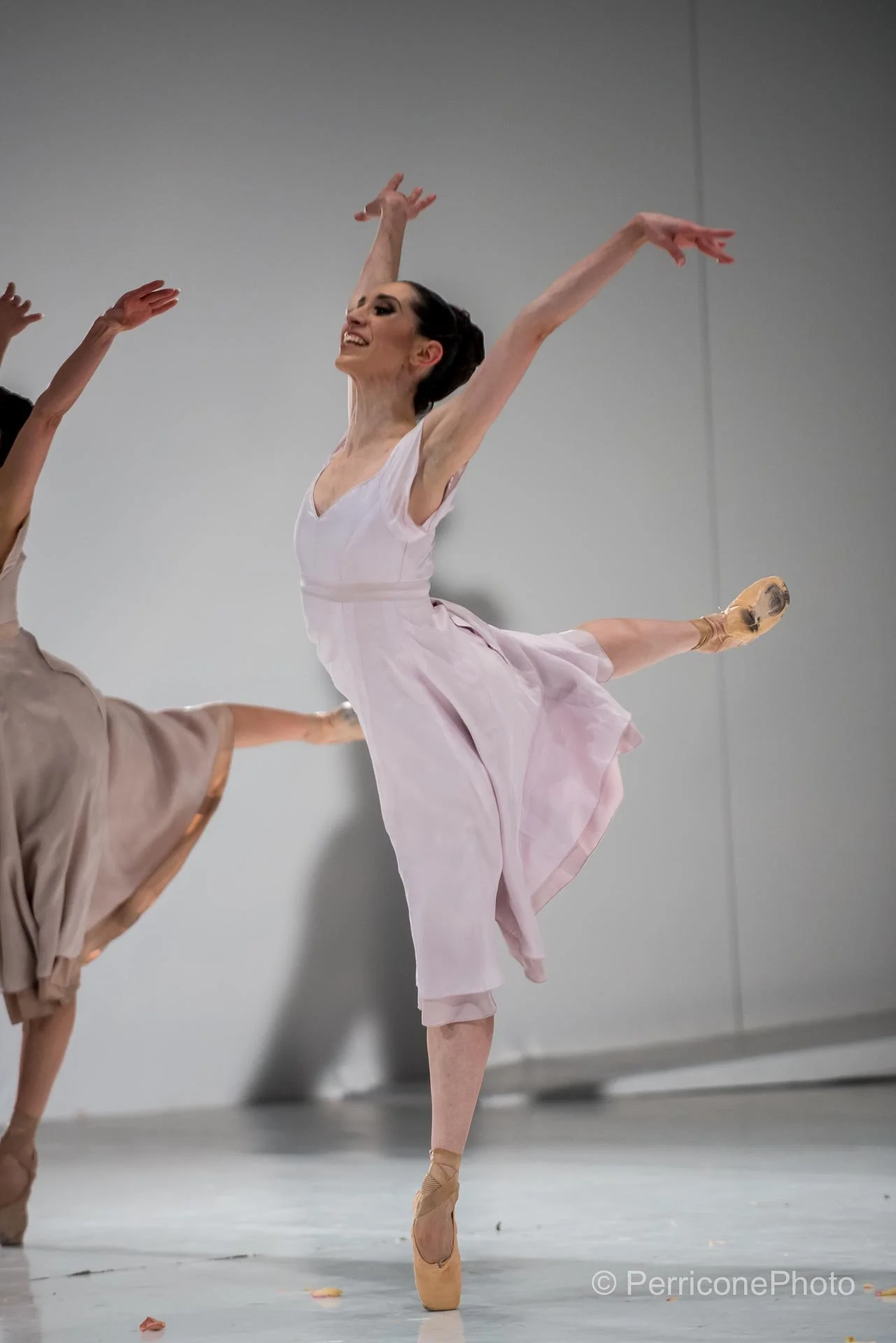
My name is Paula Archangelo‑Cakir. I was born in São Paulo and began dancing at the age of five, deciding early on to pursue a professional career in ballet.
My training and professional path took me from Brazil to England and across Europe, including formal education at the Palucca University of Dance Dresden and graduation from the Hamburg Ballet School, where I also had the opportunity to dance and tour with the Hamburg Ballet. As a professional dancer, I worked internationally in Ireland, Germany, and Slovenia, performing classical repertoire as well as neo‑classical and contemporary works in environments defined by high expectations, pressure, and constant evaluation.
During my dance career, I began studying for a Bachelor of Science in Psychology, driven by a growing interest in how psychological factors shape performance, learning, and wellbeing. My academic work focused on self‑esteem and self‑confidence in professional dancers, bridging lived experience with applied psychological research.
After becoming a mother of three and stepping away from the stage, I entered a new professional chapter that remains closely connected to leadership, performance, and responsibility. I work in management as Practice Manager and Workplace Wellbeing Lead in a healthcare setting and have completed an MBA in Leadership & Management, grounding my work firmly at the intersection of psychology, organizational leadership, and strategy.
In this role, I designed, implemented, and evaluated a longitudinal organizational wellbeing intervention, integrating Self‑Determination Theory and Salutogenesis into the structural and governance‑level functioning of the organization. This included participatory team structures, psychosocial risk assessment embedded in daily practice, and the systematic linking of psychological outcomes (such as stress, autonomy, and sense of coherence) with organizational indicators including absenteeism, productivity, and leadership capacity.
This combination of psychology, management, and real‑world leadership practice has shaped my understanding of how mental health, organizational design, and performance interact in high‑demand contexts.
Pas de Santé emerged from this intersection: a space where psychology, movement, and leadership come together to support individuals and organizations in building mentally sustainable high‑performance cultures. My work today is evidence‑based, context‑sensitive, and informed by lived experience — supporting environments where excellence is essential and wellbeing is a structural responsibility, not an afterthought.